This post contains Amazon affiliate links. As an Amazon Associate, HomeMechanicals.com earns from qualifying purchases — see our affiliate disclosure for details. Prices shown were verified on Amazon on September 15, 2026 and change frequently — always check the current price before buying.
Affiliate disclosure: HomeMechanicals.com earns a commission from qualifying Amazon purchases made through links in this post. Full policy: /affiliate-disclosure/.
When people ask “how much does a new furnace or AC cost,” they’re usually quoted a single number that bundles together three very different things: the equipment, the labor to install it, and the permit fee to make it legal. Bundling those together is fine for a quick gut-check, but it hides where your money is actually going and where a homeowner has any real choice in the price. This guide breaks the three apart, using real current Amazon prices for the equipment tier and independent contractor cost-guide data (Angi, HomeGuide, Fixr) for labor and permits, since full installation labor isn’t something you buy on Amazon.
The Three Cost Components
- Equipment — the furnace or condenser unit itself. This is the one piece you can price-shop directly, including on Amazon.
- Labor — removal of the old unit, installation of the new one, refrigerant line work (AC/heat pump) or gas line and venting work (furnace), and electrical hookup. Must be done by a licensed HVAC contractor; refrigerant work specifically requires EPA Section 608 certification by law.
- Permits — a mechanical (and sometimes gas) permit filed with your local building department, plus a required inspection in most jurisdictions.
Industry cost breakdowns generally put equipment at roughly 60–65% of a typical installed job, labor at 25–30%, and permits/incidental materials making up the remaining 5–10% — though that split shifts a lot on high-efficiency or oversized equipment, where the unit cost climbs faster than the labor to hang it.
Furnace Cost Breakdown
| Tier | Example Unit (Amazon) | Unit Price | Typical Installed Total* |
|---|---|---|---|
| Standard efficiency (80% AFUE) |  Goodman 100,000 BTU 80% AFUE Furnace |
See current price | ~$2,800–$4,500 |
| High efficiency (96% AFUE) |  Goodman 60,000 BTU 96% AFUE Two-Stage Furnace |
See current price | ~$3,500–$6,500 |
| Propane, high efficiency (96% AFUE) | 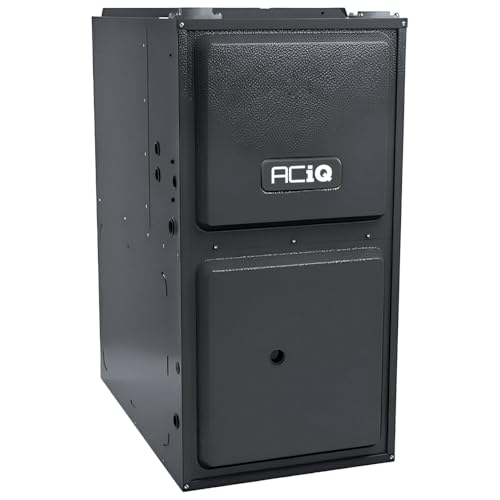 ACiQ 80,000 BTU 96% AFUE Propane Furnace |
See current price | ~$3,500–$7,000 |
*Installed totals are typical ranges reported by Angi, HomeGuide, and Fixr for 2026, not a quote specific to any of the units above — actual installed cost depends heavily on venting changes (high-efficiency furnaces often need new PVC intake/exhaust venting where the old unit used a metal flue), ductwork condition, and local labor rates.
On labor specifically: a straightforward like-for-like furnace swap runs roughly $1,000–$2,000 in labor for 4–8 hours of work; more involved jobs (venting changes, electrical upgrades, tight mechanical closets) can push labor to $2,000–$3,000. Removing the old unit typically adds another $60–$330 depending on your area and whether the old unit needs special disposal.
Central AC / Heat Pump Cost Breakdown
| Tier | Example Unit (Amazon) | Unit Price | Typical Installed Total* |
|---|---|---|---|
| Standard efficiency condenser only (14.3 SEER2) |  ACiQ 2 Ton 14.3 SEER2 Heat Pump Condenser |
See current price | ~$4,500–$7,500 (condenser + matched coil + install) |
| Mid-tier condenser (up to 15.2 SEER2) |  Goodman 2.5 Ton Up To 15.2 SEER2 Air Conditioner |
See current price | ~$5,000–$8,500 |
| Complete system with heat kit & line set (5 ton, 14.5 SEER2) |  5 Ton 14.5 SEER2 Central AC Heat Pump System, 10kW & 30ft Kit |
See current price | ~$7,500–$12,000+ |
*Same caveat as above: these installed ranges come from 2026 contractor cost-guide data (Angi, HomeGuide, ConsumerAffairs), not a quote on the specific listed unit. Central AC/heat pump labor generally runs $1,500–$3,500 for a standard swap (6–10 hours), climbing toward $5,500 when ductwork modifications or an electrical panel upgrade are involved. Note that a bare condenser also needs a matched indoor evaporator coil, which is a separate line item your contractor will spec — it’s usually not included in the condenser price alone.
Permit Costs and Regional Variation
Permit fees are one of the more locally variable pieces of this puzzle. Across a sample of 28 U.S. cities, average HVAC replacement permit fees have been reported around $133 (median roughly $107), ranging from about $25 in Boston to over $550 in Phoenix. As general ranges:
- Basic mechanical permit (simple AC or furnace swap, no ductwork changes): roughly $50–$300 in most areas
- Permits including ductwork changes or gas line work: roughly $250–$1,500 depending on scope and jurisdiction
- Some metro areas (e.g., parts of California) add plan-review fees on top of the base permit, sometimes 50–65% of the permit fee itself, plus a smaller technology surcharge
Beyond permits, cost guides estimate total installed HVAC replacement costs can swing by up to roughly 35% purely based on region — driven by local labor rates, the DOE’s regional efficiency minimums (Southern states require higher minimum SEER2 than Northern ones), and permit fee structure, independent of the equipment itself. In plain terms: the same furnace or condenser can have a meaningfully different all-in cost depending on your ZIP code, and that’s before you’ve compared a single contractor bid.
Why the Sticker Price on the Unit Is Rarely the Full Story
It’s tempting to look at an around-$1,500 furnace or an around-$1,600 condenser online and assume that’s most of the job. In practice, for most homeowners going through a licensed contractor, labor and permits typically add somewhere in the range of 40–70% on top of equipment cost, sometimes more if venting, ductwork, or electrical work is needed. That’s not a guarantee for your specific situation — only a contractor who’s seen your mechanical closet, your electrical panel, and your existing ductwork can quote your actual job. What buying the equipment ahead of time (where a contractor allows owner-supplied units) mainly gets you is price transparency and brand choice on the one line item you can control.
A Note on Buying Equipment Yourself
Some contractors are happy to install a unit you’ve sourced yourself; others prefer to supply their own equipment, largely because manufacturer warranties are frequently tied to professional installation and registration, and because a contractor has less liability exposure when they control the whole supply chain. Neither approach is wrong — it’s worth asking upfront during quoting rather than buying equipment first and hoping a contractor will install it. If you do go the owner-supplied route, keep the original packaging, documentation, and receipt, since warranty claims typically require proof of purchase and model/serial numbers.
For the water-heating side of this same buy-vs-contractor-quote question, see our related posts on best tankless water heaters (gas vs. electric) and tankless vs. traditional water heater cost, which walk through a similar cost-breakdown approach for that system.
Common Questions
Is it cheaper to replace the furnace and AC at the same time?
Often, yes, if both are near end of life — a single mobilization of labor, one permit application instead of two, and one round of ductwork/electrical inspection can reduce combined labor cost compared to two separate jobs months apart. It’s not automatic, though; get a combined quote alongside separate quotes for each unit before assuming a bundled job is the better deal for your specific situation.
Why do high-efficiency furnaces sometimes cost more to install than the unit price difference suggests?
Because efficiency tier and venting type are linked. Standard 80% AFUE furnaces vent through a metal flue, similar to the old unit. High-efficiency 90%+ AFUE furnaces condense flue gas and require new PVC intake/exhaust venting run to an exterior wall — that’s added labor and materials on top of the AFUE upgrade itself, which is a big part of why the installed-cost gap between tiers is often wider than the unit-price gap alone.
Do permit costs ever get waived?
Rarely, and skipping a required permit isn’t a real cost-saving option — it can create problems at resale (unpermitted mechanical work is a common home-inspection flag), and it can void manufacturer and contractor warranties if something goes wrong without an inspection on record. If a contractor suggests skipping the permit to save money, treat that as a warning sign about the job overall, not a helpful cost tip.
Bottom Line
One more factor worth weighing before you commit: furnaces typically last 15-20 years and central AC/heat pump condensers typically last 12-15 years, so replacing an aging-but-still-working unit proactively (versus waiting for a mid-winter or mid-summer failure) can mean more time to shop, compare contractor quotes, and avoid emergency-service pricing.
Expect a furnace replacement to land somewhere between roughly $2,800 and $7,500 installed for most homes, and a central AC or heat pump replacement somewhere between roughly $3,500 and $14,000 installed, with the wide spread driven mostly by efficiency tier, ductwork/venting condition, and your local labor and permit costs rather than by which specific brand you choose. Use the unit prices above to sanity-check the equipment line on any quote you receive, and always confirm permit and labor costs directly with your local licensed contractor — those numbers are the part no online guide, including this one, can pin down for your specific address.
Pingback: Best Whole-House Humidifiers for Winter: Bypass vs. Fan-Powered vs. Steam - HomeMechanicals