This post contains Amazon affiliate links. As an Amazon Associate, HomeMechanicals.com earns from qualifying purchases; see our affiliate disclosure for details. Prices shown were verified on Amazon on October 5, 2026 and change frequently, so check the current price before buying.
Once the furnace starts running for long stretches, indoor air in cold climates gets dry. Cold outdoor air holds very little moisture, and when it leaks into the house and is heated, its relative humidity drops sharply. A portable humidifier can help one room. A whole-house humidifier mounts on the furnace ductwork, connects to a water line, and adds moisture to every room the forced-air system serves.
This guide compares the three main types (bypass, fan-powered and steam), six units currently sold on Amazon, and the installation and maintenance questions to settle before you buy. Every spec below comes from the manufacturer’s Amazon listing, AprilAire’s published literature or the model name itself; nothing here is a hands-on measurement. The bypass, fan-powered and steam labels are the standard HVAC-industry categories rather than words taken from one listing title.
Quick Picks
- Compact bypass for smaller homes: AprilAire 500 (about $285), 12 gallons per day, up to 3,600 sq. ft. in tightly built homes.
- Higher-output bypass: AprilAire 600 (about $340), 17 gallons per day, up to 5,000 sq. ft.
- Fan-powered, no bypass duct: AprilAire 700 (about $530), 18 gallons per day, up to 5,300 sq. ft.
- Steam, for large homes or low-temperature heat: AprilAire 800 (about $1,120), 11.5 to 34.6 gallons per day depending on voltage and setup.
- Basic bypass alternative: Honeywell Home HE200A1000 (about $265).
- Low-profile fan-assist: GeneralAire 4400A with GFX4 control (about $310).
Bypass vs. Fan-Powered vs. Steam: How Each Type Works
Bypass humidifiers
A bypass unit mounts on the supply or return plenum and is connected to the other side by a short bypass duct. When the furnace blower runs, pressure difference pushes some warm air through a water-soaked evaporator pad (AprilAire calls it a Water Panel) and back into the system. There is no motor in the humidifier itself, which keeps the design simple. The trade-off is that output depends on the furnace running and on the temperature of the air moving through it, and there has to be room for the bypass duct.
Fan-powered humidifiers
A fan-powered unit has its own blower that pulls heated air from the furnace through the pad, so no bypass duct is needed. AprilAire’s listing for the 700 describes this as a built-in fan that “pulls heated air directly from the furnace through the humidifier.” It needs power for the fan, and it typically delivers somewhat more output than a bypass unit of similar size, which shows in the 700’s 18 gallons-per-day rating versus 17 for the 600.
Steam humidifiers
A steam unit boils water and injects the vapor into the ductwork. Because it makes its own heat, its output does not depend on how warm the furnace air is. That matters for homes heated by heat pumps or high-efficiency systems that deliver cooler supply air than a conventional gas furnace, where evaporative units can fall short of their rated output. Steam units cost more up front, draw more electricity, and generally need a dedicated electrical circuit.
The Six Units Compared
| Model | Type | Listed output | Listed coverage | Price (Oct 5, 2026) |
|---|---|---|---|---|
| AprilAire 500 | Bypass (compact) | 12 gal/day | Up to 3,600 sq. ft. | about $280 |
| AprilAire 600 | Bypass (high output) | 17 gal/day | Up to 5,000 sq. ft. | about $340 |
| AprilAire 700 | Fan-powered | 18 gal/day | Up to 5,300 sq. ft. | about $530 |
| AprilAire 800 | Steam (electrode) | 11.5 to 34.6 gal/day | Up to 10,300 sq. ft. | about $1,100 |
| Honeywell HE200A1000 | Bypass (large) | Not stated in listing | Not stated in listing | about $270 |
| GeneralAire 4400A | Fan-assist | Not stated in listing | Not stated in listing | about $310 |
AprilAire’s coverage figures are for “tightly built homes.” An older, draftier house loses humid air faster and needs more output for the same floor area, so treat the square-footage numbers as an upper bound rather than a target.
AprilAire 500: compact bypass
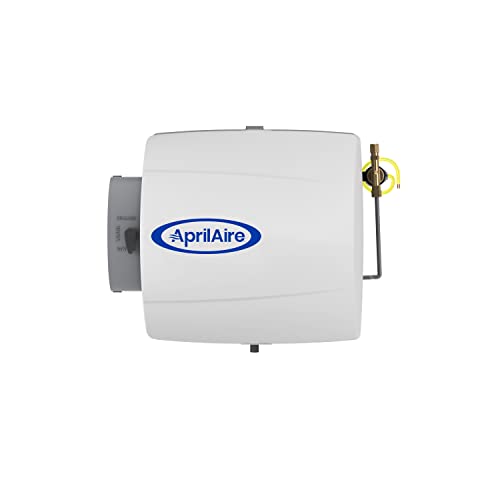
The AprilAire 500 is the smallest unit in AprilAire’s evaporative line, rated at 12 gallons per day for homes up to 3,600 sq. ft. Its compact size helps where the furnace sits in a tight closet. The listing describes an automatic digital control with dual sensors that track outdoor temperature and indoor relative humidity, plus indicator lights for Water Panel changes and service. A blower activation switch lets it run continuously or only with the furnace. Price on October 5, 2026: about $285.
AprilAire 600: higher-output bypass

The AprilAire 600 uses the same automatic dual-sensor control as the 500 but steps up to 17 gallons per day and up to 5,000 sq. ft. For a typical mid-size forced-air home with room for a bypass duct, this is the model many installers reach for first. Price on October 5, 2026: about $340.
AprilAire 700: fan-powered

The AprilAire 700 adds a built-in fan, which removes the need for a bypass duct and lifts output to 18 gallons per day for up to 5,300 sq. ft. It is the better fit when there is no practical route for a bypass duct, or when the supply plenum is the only workable mounting spot. The fan needs line voltage, which is part of why installation should be done by an HVAC technician. Price on October 5, 2026: about $530.
AprilAire 800: steam

The AprilAire 800 is an electrode steam humidifier with six output levels, listed at 11.5 to 34.6 gallons per day “based on voltage and installation,” and coverage up to 10,300 sq. ft. One detail worth knowing: AprilAire’s listing says electrode technology relies on minerals in the water to conduct electricity, so “water filtration is not recommended.” Do not plan to feed it from a reverse osmosis line. Expect a dedicated electrical circuit and a larger installation bill than an evaporative unit. Price on October 5, 2026: about $1,120.
Honeywell Home HE200A1000: large bypass
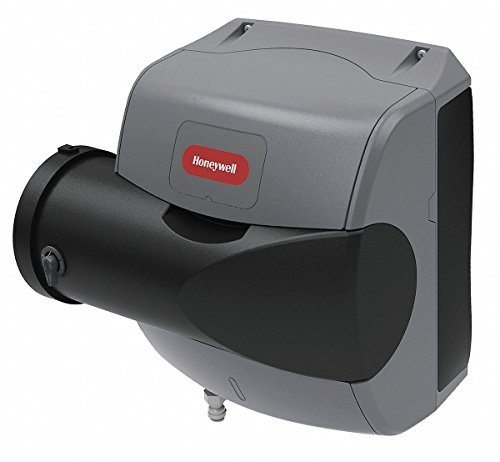
The Honeywell Home HE200A1000 is listed as a TrueEASE large basic bypass humidifier. The Amazon listing gives few specs beyond the part number and type, so check Honeywell Home’s product documentation for its rated output and the control it is meant to pair with before choosing between it and the AprilAire bypass models. Price on October 5, 2026: about $265.
GeneralAire 4400A with GFX4 control: low-profile fan-assist

The GeneralAire 4400A is a fan-assist unit with a low profile for small installation spaces, a hinged door and lift-off cover for maintenance access, and a stainless steel water tube that the listing says allows a hot water connection for greater output. It ships with GeneralAire’s GFX4 control. The listing showed limited stock on October 5, 2026. Price that day: about $310.
Installation: What Is Involved and Who Should Do It
A whole-house humidifier is not a plug-in appliance. Depending on the model, installation means cutting openings in the furnace plenum, running a bypass duct, tapping a water supply line, routing a drain line for evaporative units that send unused water to a drain, mounting an outdoor temperature sensor, and wiring the unit into the furnace control circuit. Fan-powered and steam units add line-voltage wiring, and steam units commonly need a dedicated circuit.
That mix of ductwork, plumbing and electrical work is why we recommend having a licensed HVAC technician install it, with any new circuit handled by a licensed electrician and permits pulled where your jurisdiction requires them. A poor installation can leak water onto the furnace, which is expensive. Also check your furnace manufacturer’s warranty terms before adding accessories; our guide to HVAC warranties covers what typically affects coverage.
If you are planning a furnace replacement this year anyway, adding the humidifier during that job usually costs less than a separate visit. See our furnace and AC replacement cost guide for the bigger picture.
Setting Humidity Without Window Condensation
The most common complaint after installing a whole-house humidifier is water on the windows. The colder it is outside, the colder the inside surface of the glass gets, and the less humidity the house can hold before moisture condenses there. Over a long winter that condensation can damage window frames and encourage mold.
That is the reason the AprilAire automatic models track outdoor temperature as well as indoor humidity: they lower the target as it gets colder. With a manual control, you have to make those adjustments yourself. Start lower than you think, watch the windows on the coldest mornings, and adjust from there. AprilAire’s listings refer to a 40% to 60% range as a goal, but in very cold weather many homes cannot hold the upper end of that range without condensation, so let the windows guide you.
Maintenance and Running Costs
- Evaporator pads: evaporative units use a replaceable pad that collects minerals. Plan on replacing it at least once per heating season, and more often with hard water. Check your model’s manual for the exact interval and part number.
- Water use: flow-through evaporative designs send some water to the drain while running. That keeps minerals moving out of the pad, but it does add water usage during the heating season.
- Steam cylinders: electrode steam units need periodic cylinder replacement, and how often depends on your water’s mineral content. Factor that ongoing cost into a steam purchase.
- Off-season: close the water supply (and the bypass damper, if fitted) when heating season ends, so the unit does not add humidity while the air conditioner is trying to remove it.
For how a humidifier fits into an efficient whole-house system, see our guide to energy-efficient whole-house HVAC systems.
Frequently Asked Questions
Do I need a forced-air furnace for a whole-house humidifier?
Yes. These units attach to the ductwork and rely on the system’s blower to distribute moisture. Homes heated by boilers, radiant floors or baseboard heaters without ducts would need a different approach, such as room humidifiers.
Bypass or fan-powered: which should I choose?
If there is space for a bypass duct and your home is within the bypass model’s rated coverage, a bypass unit is simpler and usually cheaper. If there is no room for the bypass duct, or you want a bit more output, a fan-powered unit is the usual choice. An HVAC technician can tell you which fits your furnace layout.
Does a whole-house humidifier work with a heat pump?
It can, but evaporative units depend on warm air passing through the pad, and heat pumps often deliver cooler supply air than a gas furnace. That can reduce output. Steam humidifiers such as the AprilAire 800 produce moisture independently of air temperature, which is why they are often suggested for heat pump systems.
Can I install one myself?
The job combines sheet-metal work, a water connection, a drain and furnace control wiring, and some models need line-voltage power or a dedicated circuit. We recommend a licensed HVAC technician, with electrical work done by a licensed electrician to local code.
Can I connect it to softened or RO water?
Check the manual for your specific model. For electrode steam units like the AprilAire 800, the manufacturer says filtration is not recommended because the process depends on minerals in the water.
Pingback: AprilAire Buyer's Guide 2026: Whole-House Humidifiers and Dehumidifiers Compared - HomeMechanicals