This post contains Amazon affiliate links. As an Amazon Associate, HomeMechanicals.com earns from qualifying purchases — see our affiliate disclosure for details. Prices shown were verified on Amazon on September 15, 2026 and change frequently — always check the current price before buying.
Affiliate disclosure: HomeMechanicals.com earns a commission from qualifying Amazon purchases made through links in this post. Full policy: /affiliate-disclosure/.
“Whole-house HVAC system” is a bit of a misnomer when you’re shopping on Amazon. A full central air conditioning or heat pump installation involves load calculations, ductwork inspection, refrigerant line sizing, electrical hookups, and a permit pulled by a licensed contractor. None of that is something you check out with Prime shipping. What you can buy on Amazon is the hardware that goes into that system: the condenser unit itself, the smart thermostat that controls it, and the components that make an existing duct system run more efficiently. This guide separates the two clearly, so you know what to research here versus what to get quoted by a contractor.
What’s Actually Amazon-Purchasable vs. Contractor-Quoted
Before the picks, here’s the honest breakdown:
- Amazon-purchasable: bare condenser/heat pump units, smart thermostats, duct insulation wrap, mastic duct sealant, foil tape, and similar efficiency components.
- Contractor-quoted only: the indoor evaporator coil matched to your condenser, refrigerant line set installation and charging, electrical circuit work, ductwork modification, permit filing and inspection, and warranty registration tied to professional installation.
A number of HVAC manufacturers will actually void the compressor warranty if the unit isn’t installed and commissioned by a licensed technician who pulls a permit. That’s not a scare tactic — it’s standard in the industry because improper refrigerant charge is the single most common cause of early compressor failure. If you’re buying a condenser through this list, plan on handing it to your contractor rather than attempting the hookup yourself.
High-Efficiency Central AC & Heat Pump Condenser Units
SEER2 is the current federal efficiency rating for cooling equipment (it replaced the older SEER metric in 2023 with a more realistic testing method, so the same physical unit shows a slightly lower number than it would have under the old test). Regional minimums now sit around 13.4 SEER2 in northern states and 14.3 SEER2 in the Southeast and Southwest. Anything above that is a genuine efficiency upgrade; the units below range from a solid baseline to a meaningfully higher tier.
| Unit | Size / Rating | Price | Best For |
|---|---|---|---|
 ACiQ 3 Ton 14.3 SEER2 Central Air Conditioner Condenser (R32) |
3 ton, 14.3 SEER2 | See current price | Baseline-efficient replacement for a mid-size home (roughly 1,500–1,800 sq ft, climate-dependent) |
 ACiQ 5 Ton 16 SEER2 Central Air Conditioner |
5 ton, 16 SEER2 | See current price | Larger homes where the higher SEER2 rating offsets a bigger cooling load over the system’s life |
 Goodman 2.5 Ton Up To 15.2 SEER2 Air Conditioner (GLXS4BA3010) |
2.5 ton, up to 15.2 SEER2 | See current price | Buyers who want a long-established national brand with wide contractor familiarity and parts availability |
A quick word on sizing: tonnage needs to match a proper Manual J load calculation for your home, not a rule of thumb pulled off a forum. An undersized unit runs constantly and never quite catches up; an oversized one short-cycles, which is hard on the compressor and does a poor job of dehumidifying. This is exactly the kind of thing your contractor should calculate before you commit to a specific tonnage — treat the prices above as tier references, not a sizing recommendation for your specific house.
Smart Thermostats That Pair With High-Efficiency Systems
A smart thermostat doesn’t replace the efficiency gains of a better condenser, but it does help you actually capture the savings a high-SEER2 system is designed to deliver — mainly by avoiding the wasted runtime of a system left on a static schedule. Most current central AC and heat pump systems, including the ones above, are compatible with common smart thermostats, but multi-stage or variable-speed heat pump systems can have more particular wiring requirements, so it’s worth confirming compatibility with your model’s spec sheet or your installer before buying.
| Thermostat | Notes | Price |
|---|---|---|
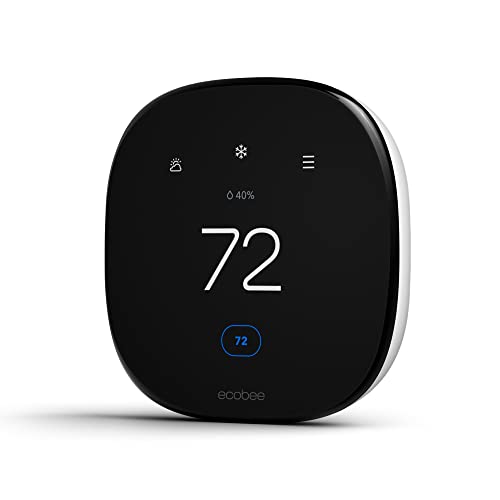 ecobee Smart Thermostat Enhanced |
Programmable WiFi thermostat, Energy Star certified, supports add-on room sensors | See current price |
 Google Nest Thermostat |
Budget-friendly programmable WiFi thermostat, straightforward app control | See current price |
Both are DIY-installable for most conventional systems, but if your setup uses a heat pump with auxiliary/emergency heat strips, a dual-fuel system, or doesn’t have a C-wire already run, get a contractor or at least a licensed electrician to confirm the wiring before you start pulling out your old thermostat.
Duct & Efficiency-Improving Components
Ductwork is where a lot of a high-efficiency system’s theoretical performance quietly leaks away. The U.S. Department of Energy has estimated that a typical home loses a meaningful share of conditioned air through duct leaks and poorly insulated runs, particularly in unconditioned attics and crawlspaces — actual figures vary a lot by house, so treat that as a directional point rather than a number to bank a specific savings estimate on. Two categories of product address this and are genuinely Amazon-purchasable, DIY-friendly upgrades for accessible ductwork:
| Product | Use | Price |
|---|---|---|
 US Energy Products R-8 HVAC Duct Wrap Insulation (4ft x 50ft) |
Reflective double-sided foam core wrap for exposed ducts in attics, garages, or crawlspaces | See current price |
 Hardcast Foil-Grip 1402 Mastic Duct Sealant (2 in x 100 ft) |
Seals joints and seams in accessible sheet-metal or flex ductwork to reduce air leakage | See current price |
These are reasonable weekend projects for ducts you can physically reach — an attic run, a basement trunk line, exposed flex duct in a crawlspace. Sealing and insulating ducts buried inside finished walls or ceilings, or any duct modification tied to the new equipment itself, is contractor territory, partly because it may need to be inspected as part of the permit sign-off.
What Still Needs a Contractor Quote
To be direct about the limits of an Amazon-based approach: a full central AC or heat pump swap needs a matched indoor coil, refrigerant line set installation and vacuum/charge (this is licensed-technician work under EPA regulations — more on that below), possible electrical panel or disconnect work, and a permit with inspection in most jurisdictions. If you’re set on buying your own condenser to control cost or brand choice, call ahead and confirm your contractor is willing to install owner-supplied equipment — some will, many prefer to supply their own for warranty-liability reasons, and that’s a reasonable position on their part, not a red flag.
Refrigerant handling specifically is federally regulated: anyone connecting, disconnecting, or charging refrigerant lines is legally required to hold an EPA Section 608 certification. This isn’t a suggestion — penalties for unlicensed refrigerant handling can be substantial, and it’s also the fastest way to void a compressor warranty. Leave that step to a licensed HVAC technician regardless of where the equipment came from.
For the water-heating side of major home systems, see our related posts on best tankless water heaters (gas vs. electric) and tankless vs. traditional water heater cost.
Common Questions
Can I just buy a condenser on Amazon and have any contractor install it?
Usually, but ask first. Some contractors are glad to install owner-supplied equipment; others prefer to supply their own because the manufacturer’s warranty and their own labor guarantee are often tied to using a certified installer with that specific brand. Confirm this before you buy rather than after, so you’re not stuck holding a condenser no one nearby will hook up.
Does a higher SEER2 rating always mean a lower utility bill?
Directionally, yes — a higher SEER2 unit uses less electricity to produce the same amount of cooling. How much that translates to in dollars depends on your climate, how many hours the system runs, your local electricity rate, and how well your ductwork holds onto the conditioned air once it’s produced. A high-SEER2 condenser paired with leaky, uninsulated ductwork will underperform its rating; that’s part of why the duct components above are on this list at all.
Is a smart thermostat worth it if I’m not replacing the whole system?
Often, yes, independent of whether you’re upgrading the condenser. A programmable smart thermostat mainly saves money by reducing unnecessary runtime — heating or cooling a home the same way whether or not anyone’s using a given room, or whether anyone’s home at all. It won’t fix an inefficient or badly sized system, but it’s one of the lower-cost, lower-risk upgrades on this whole list.
Bottom Line
A well-installed, properly-maintained central AC or heat pump system typically lasts 13-20 years depending on climate and usage, with coastal/high-humidity and heavy-runtime climates trending toward the shorter end — worth factoring in alongside SEER2 when deciding whether a bigger efficiency upgrade pays for itself in your specific situation.
Amazon is a legitimate place to research and buy the condenser, the thermostat, and the duct-efficiency accessories that go into a high-efficiency HVAC setup. It is not a place to buy a “complete installed system” — that part of the job, by design and by law in most places, belongs to a licensed HVAC contractor. Use the picks above as a starting point for comparing specs and prices, then bring them (or your contractor’s equivalent recommendation) into the quoting conversation.