This post contains Amazon affiliate links. As an Amazon Associate, HomeMechanicals.com earns from qualifying purchases — see our affiliate disclosure for details. Prices shown were verified on Amazon on September 15, 2026 and change frequently — always check the current price before buying.
This post contains Amazon affiliate links; we may earn a commission on qualifying purchases at no extra cost to you. Full policy at /affiliate-disclosure/.
The Part That Actually Runs the Softener
When people shop for a water softener, the fiberglass tank and the resin inside get most of the attention. But the component actually doing the work — deciding when to regenerate, how much brine to draw, and how efficiently the resin gets restored — is the control valve mounted on top. Three manufacturers build the overwhelming majority of control valves found on residential softeners sold in North America: Fleck, Clack, and Autotrol. Knowing which valve is inside a given softener, whether it’s sold under the valve maker’s own name or hidden inside a private-label unit, tells you more about how the system will perform day to day and how easy it’ll be to service than the brand printed on the tank does.
This is a valve-level comparison, not another full-softener buying guide. If you want help picking a complete system, see our best water softeners roundup or the water treatment decision matrix.
How These Valves Actually Regenerate: Metered vs. Timer
All three manufacturers offer both metered (“on-demand”) and timer-based regeneration options, and that distinction matters more day-to-day than which brand badge is on the valve.
- Metered valves track actual water usage with an internal meter and trigger regeneration only after the household has used a set number of gallons — generally more efficient with salt and water over time, especially for households with uneven usage patterns.
- Timer-based valves regenerate on a fixed schedule (for example, every third night at 2 a.m.) regardless of how much water was actually used. Simpler and typically cheaper, but less efficient if usage varies week to week.
Fleck’s 5600SXT and Autotrol’s Performa Logix are both digital, metered-capable heads and are the default choice on most current residential installs; timer versions of each still turn up on lower-cost or older-stock units. Clack’s WS1 is metered by design — Clack doesn’t really sell a timer-based residential head — which installers tend to mention as one of the more consistent things about the brand.
Fleck
Fleck, now owned by Pentair, is the most widely specified control valve in the North American aftermarket and DIY softener market. Installer and trade-forum commentary is fairly consistent on a couple of points: the valve has a long track record for mechanical durability, and because it’s used so widely, replacement parts and third-party rebuild kits are easy to source from multiple suppliers rather than one dealer network. The trade-off some of that same commentary points to is that Fleck-based systems are also the ones most commonly serviced through dealer networks that charge for that convenience — the parts themselves aren’t inherently expensive, but dealer labor and proprietary service calls can add up if you’re not comfortable doing the work yourself.
Two current examples of complete Fleck 5600SXT-based softeners:
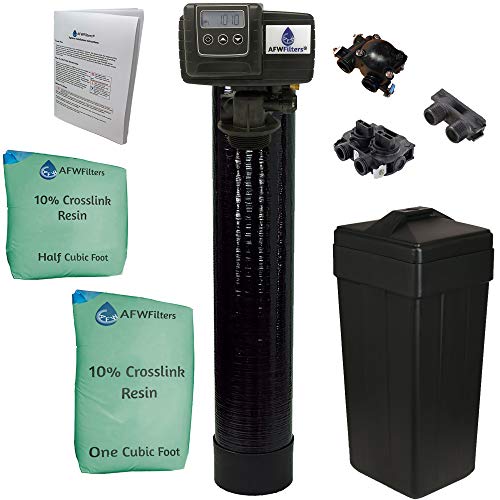
AFWFilters Fleck 5600 SXT Digital Water Softener with 10% Crosslink Resin — seen at about $790 at the time of writing (verify current price on the product page).

Fleck 5600SXT 48,000 Grain Digital Metered Water Softener — seen at around $810 at the time of writing (verify current price on the product page).
Clack
Clack’s WS1 valve has a strong reputation among installers for being straightforward to repair and for using fewer moving parts than some competitors, which several trade sources cite as a reliability advantage. It also tends to support a higher maximum flow rate than comparable Fleck or Autotrol heads, which matters more in larger households or homes running multiple fixtures at once.
Worth flagging honestly: Clack shows up far more often as the valve inside other companies’ branded softeners than as a complete “Clack-branded” consumer unit sold directly on Amazon. A clean, complete Clack-branded softener wasn’t available through our product search at the time of writing, so we’re not forcing one in here. What does show up reliably is genuine OEM Clack WS1 parts and rebuild kits — which is itself a useful data point for the DIY-serviceability question below:

Genuine OEM Clack WS1 Interior Rebuild Kit — seen at about $90 at the time of writing. A full OEM rebuild kit for a WS1 valve running under $100 is a reasonable data point for how inexpensively Clack parts can be sourced directly, without routing through a dealer network.
Autotrol
Autotrol, also a Pentair brand, was the dominant dealer-network valve before Fleck took over much of the DIY and online-retail space. It’s less prominent in today’s direct-to-consumer market than Fleck or Clack, but it’s still actively sold and used, particularly through dealer channels and on some private-label systems. The Performa Logix control head is Autotrol’s current metered digital option. Some installer commentary flags the internal disc-stack design (as opposed to a piston-style valve) as having more moving parts than a Clack WS1, though multiple sources describe Autotrol as reliable for straightforward residential use when properly maintained.
A current example of a complete Autotrol-valve softener:

Autotrol 268/760 Performa Logix 48K Grain Water Softener — seen at around $1,100 at the time of writing (verify current price on the product page).
Which Budget and Private-Label Softener Brands Use Which Valve
This is the part most buying guides skip, and it’s genuinely useful when you’re comparing a sub-$1,000 online softener against a multi-thousand-dollar dealer quote. A large share of budget and mid-tier softeners sold under names like AFWFilters (including its Iron Pro 2 line) and DuraWater are built around a Fleck 5600SXT head bolted to a generic fiberglass tank — the branding differs, but the mechanical guts and the parts you’d need to service it are the same across many of those product lines. Clack’s WS1 shows up as the internal valve on a number of other companies’ branded softeners as well, even when “Clack” doesn’t appear anywhere in the product title. Autotrol valves are more likely to appear on dealer-installed systems and some legacy big-box lines than on newer budget online listings.
Practical takeaway: when you’re comparing two softeners with different brand names and a large price gap, check what valve is actually inside before assuming the more expensive one is mechanically different. Sometimes it’s the same head on a different tank with a different sticker — and sometimes the price difference reflects dealer service, installation, and warranty support bundled in, not a better valve. We can’t verify that for every listing, so check the manufacturer spec sheet or ask the seller directly before assuming either way.
DIY-Serviceability at a Glance
| Valve | Parts availability | Repair difficulty (per installer/trade commentary) |
|---|---|---|
| Fleck | Widest — many third-party suppliers carry parts and full rebuild kits | Well documented online; plenty of tutorials and forum threads to reference |
| Clack | OEM kits inexpensive and available direct, as shown above | Described by several trade sources as comparatively simple, with fewer moving parts |
| Autotrol | More often serviced through dealer networks; parts less commonly stocked by third-party online sellers | Disc-stack design described by some installers as more involved than a piston-style valve |
None of this is a guarantee about how any specific unit will hold up in your home — water chemistry, usage volume, and maintenance habits all matter more than brand alone. Treat the table above as a starting point for questions to ask, not a verdict.
There’s No Single “Best” Valve
Every source we reviewed for this piece frames Fleck, Clack, and Autotrol as trade-offs rather than a clear winner and losers — wide parts availability and DIY documentation (Fleck) versus mechanical simplicity and inexpensive OEM parts (Clack) versus dealer-channel reliability with a smaller retail footprint (Autotrol). If you’re comparing quotes or listings, ask directly which valve is inside, whether it’s metered or timer-based, and where you’d source parts if it needs service in year eight. For help thinking through the full purchase — softener vs. filter vs. RO, and what installation typically costs — see our water softener vs. whole-house filter comparison and installation cost breakdown. Always confirm current specs, warranty terms, and pricing directly with the manufacturer or seller before buying — listings and prices change.