This post contains Amazon affiliate links. As an Amazon Associate, HomeMechanicals.com earns from qualifying purchases — see our affiliate disclosure for details. Prices shown were verified on Amazon on September 15, 2026 and change frequently — always check the current price before buying.
Affiliate disclosure: HomeMechanicals.com earns a commission from qualifying Amazon purchases made through links in this post. Full policy: /affiliate-disclosure/.
Ductless mini-split heat pumps are one of the few “whole comfort system” categories where Amazon actually sells the complete outdoor-and-indoor package, often bundled with a line set and a mounting kit. That makes them different from a central AC system, where you’re really only buying one component of a larger installed job. But “you can buy the whole kit” doesn’t mean the whole installation is a DIY project — the refrigerant line work still falls under federal regulation regardless of how the unit is packaged. This guide covers five real mini-split systems across capacity and price tiers, what SEER2 and BTU actually tell you, and exactly where the licensed-installer line sits.
How to Size a Mini-Split: BTU and Square Footage
As a rough starting point, a 12,000 BTU (1-ton) single-zone unit is generally sized for around 500–600 square feet under average conditions — 8-foot ceilings, moderate climate, reasonable insulation. That number moves a lot with ceiling height, insulation quality, sun exposure, and your local climate zone, so treat it as a ballpark for comparing listings, not a substitute for a proper room-by-room load calculation. For multi-zone systems, the outdoor unit’s total BTU rating should roughly match the sum of the indoor heads it’s feeding — for example, a bedroom needing about 8,000 BTU plus an office needing about 10,000 BTU points toward an 18,000 BTU two-zone outdoor unit.
What SEER2 Actually Tells You
SEER2 replaced the older SEER rating in 2023 with a more realistic seasonal efficiency test, so a unit’s SEER2 number will typically read a bit lower than its old SEER number would have for the same hardware. In today’s mini-split market, budget inverter units generally cluster in the mid-to-high teens SEER2, while premium models — usually from established brands with more refined inverter-compressor technology — can exceed 20 SEER2 and, in some single-zone cold-climate models, run considerably higher. Higher SEER2 generally means lower cooling electricity use for the same output, but the exact dollar savings depend on your local electricity rate and how many hours the unit runs, so we won’t put a specific savings number on it here.
Five Real Mini-Split Systems, By Tier
| System | Capacity / Zones | SEER2 | Price |
|---|---|---|---|
| Rellytech Mini Split AC/Heating System | 12,000 BTU, single zone | 19 | about $350 |
| TURBRO Ductless Mini Split Inverter AC with Heat Pump | 12,000 BTU, single zone | 23 | about $600 |
| Mitsubishi Wall Mount Ductless Mini-Split | 12,000 BTU (1 ton), single zone | 18 | about $1,550 |
| DELLA 2 Zone Mini Split AC & Heat Pump | 18,000 BTU total (7,000 + 7,000), 2 zones* | 22 | about $1,350 |
| YITAHOME 3 Zone Mini Split AC/Heating System | 24,000 BTU total (9,000 x3), 3 zones* | 23 | about $1,700 |
*Outdoor unit BTU rating is the manufacturer’s nominal capacity and doesn’t always equal the arithmetic sum of the connected indoor heads — this labeling quirk is standard across multi-zone brands, not an error in this table.
Budget Single-Zone: Rellytech 12,000 BTU (19 SEER2) — about $350

View on Amazon. This is the entry point for a single room — a bonus room, a garage conversion, or a single bedroom that runs hot or cold relative to the rest of the house. A 19 SEER2 rating is a respectable efficiency number for the price tier, though budget mini-split brands generally have a thinner independent parts and service network than the established names, which matters more if something needs warranty service down the road.
Efficient Single-Zone: TURBRO 12,000 BTU Inverter (23 SEER2) — about $630

View on Amazon. Same capacity as the Rellytech above but a noticeably higher SEER2 rating, which is the more relevant comparison than price alone if you’re running the zone frequently — a home office or a room used daily rather than occasionally.
Premium Brand Single-Zone: Mitsubishi 12,000 BTU (SEER 25.6) — about $2,500
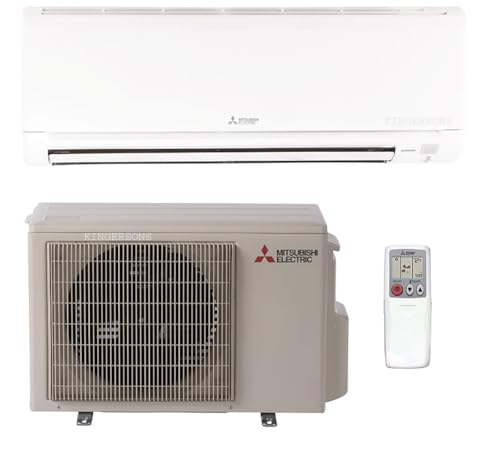
View on Amazon. One important caveat on the efficiency number: this unit’s listing quotes SEER 25.6, not SEER2, while the other four systems here are quoted in SEER2. Those are two different test standards and the figures are not directly comparable — SEER2 testing uses higher external static pressure, so the same equipment scores lower under SEER2 than under the older SEER rating. As a rough guide, dividing a SEER figure by about 1.05 gets you into SEER2 territory, which would put this unit above the 19–23 SEER2 systems above — but treat that as an estimate, not a published rating.
At about $2,500 this is by a wide margin the most expensive system on this list, more than either multi-zone system below it. What you are paying for is generally the brand’s service ecosystem rather than raw capacity — established brands like Mitsubishi typically offer a wider certified-installer network and stronger long-term parts availability. One thing to check before you buy on that basis: warranty terms on Amazon-sold HVAC equipment can differ from what you would get buying the same brand through an authorized local dealer, and Mitsubishi’s full consumer warranty is generally tied to purchase and installation through an authorized dealer with timely product registration. Confirm directly with Mitsubishi or the seller what coverage actually transfers with this specific listing before treating full manufacturer backing as part of what the premium buys.
2-Zone: DELLA 18,000 BTU Total, 2 Zones (22 SEER2) — about $1,350
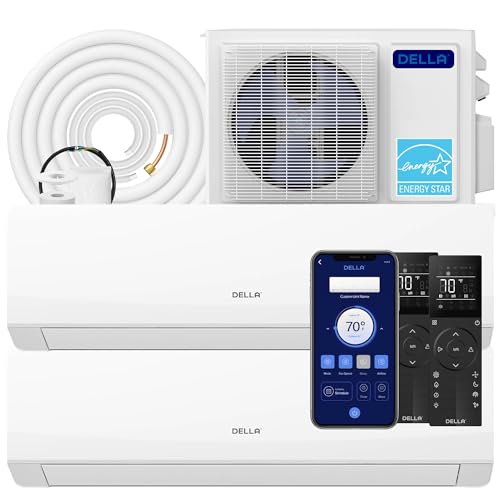
View on Amazon. A reasonable starting point for covering two rooms — say a primary bedroom and a home office — off a single outdoor condenser, which is generally more cost- and space-efficient than running two separate single-zone systems if both rooms are on the same side of the house.
3-Zone: YITAHOME 24,000 BTU Total, 3 Zones (23 SEER2) — about $1,700

View on Amazon. The largest system on this list by zone count, aimed at covering an addition, a finished basement with multiple rooms, or a small home’s entire living space without ductwork. Multi-zone systems add complexity at install time — three line sets instead of one — so budget for meaningfully more labor than a single-zone job (see cost section below).
The Licensed-Installer Line: What “Pre-Charged” Does and Doesn’t Mean
Every system above ships pre-charged with refrigerant from the factory, and manufacturers of quick-connect kits market this as letting a homeowner skip professional installation entirely. Be skeptical of that marketing claim. EPA’s own published guidance states plainly that connecting or disconnecting hoses or pre-charged lines during installation requires EPA Section 608 technician certification — not just cutting a line or adding/removing refrigerant. Some manufacturers argue their specific quick-connect fittings fall outside that requirement, but this is a disputed legal interpretation the industry itself is not settled on, not confirmed EPA policy you can rely on. We’re not going to tell you it’s fine to connect the lines yourself based on a manufacturer’s marketing claim. Certification is required, at minimum, any time any of the following applies:
- Connecting or disconnecting the pre-charged line set to the indoor or outdoor unit — including the quick-connect fittings some brands market as DIY-safe
- The line-set length needs to be cut, extended, or otherwise altered from what the kit ships with
- Any refrigerant needs to be added, removed, or recovered
- Hoses, gauges, or fittings need to be attached to or detached from the refrigerant circuit for any reason, including troubleshooting
Handling refrigerant without EPA Section 608 certification is a federal violation with penalties that can run into the tens of thousands of dollars, and separately, it’s one of the fastest ways to void whatever manufacturer warranty came with the unit. Treat any refrigerant line connection on any of these units — pre-charged fitting or not — as licensed-installer territory unless you’ve independently confirmed otherwise with EPA or your own legal counsel, not based on marketing copy from the brand selling you the unit. Electrical hookup is its own separate consideration — most of these systems need a dedicated 208–230V circuit, and that connection should be done by a licensed electrician or HVAC technician, not wired into an existing outlet. Local permitting requirements for mini-splits also vary by jurisdiction; some treat them like any other HVAC equipment requiring a mechanical permit and inspection, others have a lighter-touch process for a single ductless unit. Check with your local building department before starting, and when in doubt, hire a licensed HVAC contractor for the full install — many will still install a unit you’ve purchased yourself, so buying through this list doesn’t have to mean doing the install yourself.
Installation Cost Beyond the Unit Price
Professional mini-split installation, per 2026 contractor cost-guide data (Angi, Bryant, HomeGuide), typically runs in the range of $2,000–$7,000 per zone all-in, with labor alone accounting for roughly $500–$1,500 per single-zone install. Line-set length and your home’s existing electrical capacity generally move the final price more than which brand you choose. Budget an additional $250–$400 for permitting in most areas, and more if a new dedicated electrical circuit needs to be run from your panel.
Bottom Line
All five systems above are legitimate, currently listed products with real SEER2 ratings and prices — not filler. Which one makes sense depends on whether you’re covering one room or several: the Rellytech and TURBRO units are reasonable single-room picks at very different efficiency levels for a similar footprint, the Mitsubishi trades a slightly lower SEER2 number for brand-backed installer support, and the DELLA and YITAHOME systems scale up to two and three rooms respectively. Wherever you land, treat the refrigerant line and electrical work as licensed-contractor territory — that’s not optional caution, it’s federal law and standard electrical code.
For related buying guides on this site, see best tankless water heaters (gas vs. electric) and tankless vs. traditional water heater cost.