This post contains Amazon affiliate links. As an Amazon Associate, HomeMechanicals.com earns from qualifying purchases — see our affiliate disclosure for details. Prices shown were verified on Amazon on September 15, 2026 and change frequently — always check the current price before buying.
Affiliate disclosure: HomeMechanicals.com earns a commission from qualifying Amazon purchases made through links in this post. Full policy: /affiliate-disclosure/.
A frozen water heater, tank or tankless, is a genuinely bad way to start a winter morning: no hot water at best, a cracked heat exchanger or split pipe at worst. Freeze risk depends heavily on where the unit is installed and what type it is, and the two water heater types fail in different ways when the temperature drops. This guide covers the real freeze-risk differences between tankless and tank units, what to look for if you are buying a new unit in a cold climate, and a practical pre-winter checklist.
Tankless Water Heaters: Freeze Protection Has a Catch
Tankless units are more exposed to freeze risk than most homeowners expect, largely because outdoor-mounted or unconditioned-space installs (a garage, an exterior wall cavity, an unheated utility room) put the unit’s narrow internal water passages directly in the path of cold air. Most modern tankless units, including the models we cover in our tankless water heater comparison, ship with built-in freeze protection — small internal heating elements that activate below a set temperature threshold to keep the unit’s internal passages from freezing.
Here is the catch: that protection typically only works while the unit is powered. A power outage during a hard freeze removes the one thing keeping the freeze protection active, which is a real and fairly common failure scenario — winter storms are a leading cause of both power outages and freezing temperatures at the same time. If you are relying on a tankless unit’s built-in freeze protection and the power goes out during a cold snap, that protection stops working exactly when you need it most. Homeowners in outage-prone cold climates sometimes address this with a battery backup sized to keep the freeze-protection circuit running, or, more simply, by knowing how to shut off and drain the unit quickly if an extended outage hits during a freeze. A small battery backup that can keep a tankless unit’s control board and freeze-protection heaters running is a very different, and far cheaper, project than whole-house backup power — see our best backup power for a 3-day outage guide if you want to weigh that specifically for a home with an exposed, unconditioned tankless install.
Among the units we have already researched for this site, the Rheem RTGH Series condensing gas tankless unit explicitly lists built-in freeze protection in its feature set, and Rinnai’s RX130iN is rated for outdoor installation with an appropriate vent cap. Electric units like the Stiebel Eltron Tempra 24 Trend avoid combustion and venting concerns entirely but still depend on power for any built-in freeze protection to function, same as a gas unit. One more freeze point specific to condensing units like the Rheem RTGH: they have a condensate drain line, separate from the main water passages, that can freeze and back up on its own if it isn’t insulated and properly sloped — worth checking alongside the unit’s main freeze protection, not something the built-in protection necessarily covers. Current prices: Rheem RTGH Series 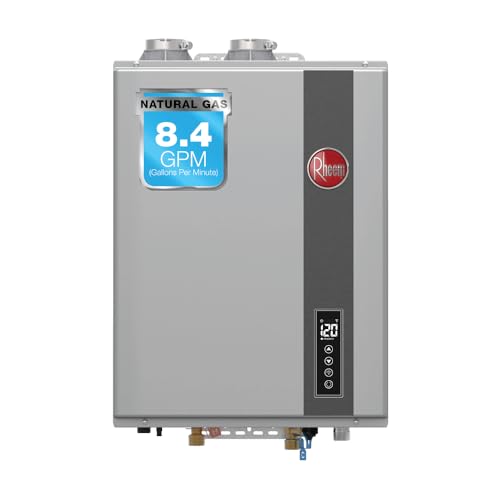 , Rinnai RX130iN
 , Stiebel Eltron Tempra 24 Trend
 .
Traditional Tank Water Heaters: A Different Exposure Profile
Tank units fail differently. A 40-50 gallon tank holds a lot of thermal mass, so a tank in a garage or unconditioned crawlspace cools more slowly than the thin water lines in a tankless unit, but it is not immune — an uninsulated tank in an unheated space, combined with a long enough outage or cold snap, can still freeze, and the inlet/outlet pipes feeding it are often the more vulnerable point of failure since they carry far less thermal mass than the tank itself.
Two practical steps address most of the real risk for a tank unit in a cold, semi-conditioned space (garage, crawlspace, unheated basement):
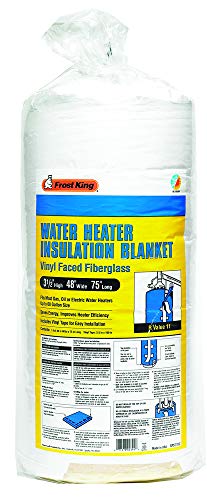
- An insulation blanket around the tank reduces heat loss and helps the tank hold temperature longer during a cold snap or outage. If your unit is gas-fired, this comes with an important caveat: do not cover the burner compartment, the thermostat, or any air intake/exhaust venting, and keep the blanket clear of the top of the unit per the manufacturer’s instructions — blocking combustion air or venting on a gas appliance is a real safety issue, not just an efficiency one.
- Insulating the exposed inlet, outlet, and any nearby run of pipe in the same unconditioned space, since bare metal or plastic pipe loses heat much faster than an insulated tank and is frequently where a freeze actually starts.
Two real products worth having on hand before winter, both verified via the Amazon Creators API:
Frost King All-Season Water Heater Insulation Blanket (R10, fits 40-60 gallon tanks)
A vinyl-backed fiberglass blanket sized for gas, oil, or electric tanks up to 60 gallons, 3 inches thick with an R10 rating. Typical price: about $35.
Radiant Solutions Company Self-Regulating Pipe Heat Tape (18 ft, built-in thermostat)
A self-regulating heat cable rated for copper, steel, PVC, ABS, and PEX pipe, with an integrated thermostat that activates around 37°F and shuts off around 50°F, plus a 10-year warranty. It is rated for indoor water pipe use specifically — the manufacturer sells a separate outdoor-rated product line, so check that you are buying the right cable for where the pipe actually runs. Price on Amazon: See current price.

Both of these are homeowner-installable insulation and wrap products, not gas, electrical, or refrigerant work — but heat tape does plug into household power, so follow the manufacturer’s instructions for the specific pipe material and location, and if you have any doubt about whether a given install location is appropriate, ask a licensed plumber rather than guess.
What to Look for When Buying a New Unit in a Cold Climate
- Install location guidance in the manufacturer’s manual. Manufacturers specify minimum ambient temperature ranges and preferred install locations (conditioned indoor space vs. garage vs. outdoor wall). Read this before assuming a unit is rated for wherever you plan to put it.
- The specific freeze-protection temperature rating. Built-in freeze protection on tankless units generally covers a specific range (commonly cited around -5°F to -22°F for many current units), and, again, only while powered. Ask specifically what a given unit’s rating is and whether it is powered-protection-only or includes any passive protection.
- Whether the install location is conditioned space at all. If you have a choice, an indoor, conditioned-space install is the single biggest freeze-risk reduction available for either tank or tankless — more effective than any insulation blanket or heat tape retrofit.
Pre-Winter Checklist
- Identify your water heater’s exact location and how exposed it is to cold: fully conditioned space, garage, crawlspace, unconditioned utility room, or fully outdoors.
- If it is tankless, confirm its built-in freeze-protection temperature rating in the manual, and note that this protection requires continuous power — factor that into your household’s outage plan if the unit sits somewhere genuinely exposed.
- If it is a tank unit in a garage, crawlspace, or unheated space, consider an insulation blanket (gas units: never cover the burner compartment, thermostat, or venting).
- Insulate exposed inlet/outlet pipe and any run through an unconditioned space; add heat tape on especially vulnerable sections.
- Locate your main water shutoff valve now, before an emergency, so you are not searching for it during a freeze event.
- If the home will be vacant for an extended period this winter, shut off the water supply and drain the system — open faucets until the flow slows to a trickle, and consult a licensed plumber if you are not confident doing this yourself, since an improperly drained system is one of the more common causes of winter freeze damage in vacant homes.
- If your home’s backup power planning matters to you generally, factor in whether a tankless unit’s powered freeze protection is one more reason to size that plan for a winter outage scenario, not just a summer one.
Common Questions
Can I just leave a faucet dripping to prevent freezing?
A slow trickle of water through a faucet is a commonly cited stopgap for preventing pipes from freezing during an active cold snap, since moving water is more resistant to freezing than standing water. It is a temporary measure for an active event, not a substitute for proper insulation or an appropriately conditioned install location.
Does homeowners insurance cover a frozen and burst water heater?
Often, yes, for sudden freeze damage, but policies vary widely on coverage for damage tied to an unoccupied home or a known, unaddressed risk. Check your specific policy language and talk to your insurer before assuming coverage, especially for a vacant or seasonal property.
Is an insulation blanket worth it on a newer, already-efficient tank unit?
Mainly for the freeze-risk benefit in a cold, unconditioned space rather than for a large energy-efficiency gain — newer tanks already have decent factory insulation. If your unit lives in a fully conditioned space, a blanket matters less; if it is in a garage or unheated area, the freeze-risk reduction alone makes it worth the modest cost.
Bottom Line
Tankless and tank water heaters carry different freeze risks: tankless units are more exposed to fast-onset freezing in their narrow passages and depend on power for their built-in protection, while tank units are slower to freeze but not immune, especially at the pipe connections. Whichever type you have, the fix is mostly the same short list — know your unit’s location and rating, insulate what is exposed, know where your shutoff is, and have a plan for the specific scenario of a power outage during a hard freeze if your unit depends on powered freeze protection. None of this is expensive or complicated; it is mostly a matter of doing it before the first real cold snap instead of after.
Pingback: Building a Whole-Home Resilience System: How Water, Power, and HVAC Work Together - HomeMechanicals
Pingback: Rinnai Tankless Water Heaters: A 2026 Buyer's Guide for Homeowners - HomeMechanicals
Pingback: Rheem Buyer's Guide 2026: Tank and Tankless Compared - HomeMechanicals