This post contains Amazon affiliate links. As an Amazon Associate, HomeMechanicals.com earns from qualifying purchases — see our affiliate disclosure for details. Prices shown were verified on Amazon on September 15, 2026 and change frequently — always check the current price before buying.
A whole-house water softener is a bigger financial decision than most home water treatment purchases, and the unit price you see advertised is only part of the real cost. Between the equipment, professional installation labor, and ongoing salt and maintenance, total cost of ownership varies more than most buying guides let on. This post breaks down each piece with real numbers, using a few actual products at different price tiers to ground the estimates rather than talking in the abstract.
Disclosure: HomeMechanicals.com is a participant in the Amazon Associates program. We may earn a commission on qualifying purchases made through links in this article, at no added cost to you. Full policy on our affiliate disclosure page.
Note on terminology: this post covers true ion-exchange water softeners, which remove hardness minerals (calcium and magnesium) via a resin bed and salt-based regeneration cycle. If you’re weighing a softener against a salt-free conditioner, which prevents scale without removing minerals, see our companion post on salt-free water conditioners and our broader Best Water Softeners for Hard Water roundup.
Piece 1: The Unit Itself
Softener unit prices scale mainly with grain capacity (how much hardness the resin bed can remove before it needs to regenerate) and control head sophistication (basic timer-based regeneration versus metered/digital heads that regenerate based on actual water usage rather than a fixed schedule, generally using less salt and water over time). Here are three real examples at different points on that curve, with current pricing at time of writing:
Budget: iSpring WCSTB45KG — 45,000 Grain Softener with Brine Tank
A complete 45,000-grain system including the brine tank, suited to small-to-mid-size households on moderately hard water.
- Typical price: about $530
- View on Amazon
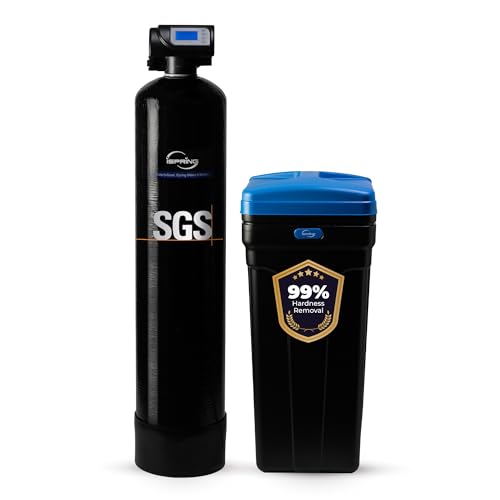
Mid-Range: Aquasure Harmony Series — 48,000 Grain with Digital Metered Control Head
Steps up to a digital metered control head, which regenerates based on actual measured water use rather than a fixed timer — generally the more salt- and water-efficient approach over the system’s lifespan — a metered head objectively uses less salt and water per regeneration cycle than a timer-based head of the same capacity.
- Typical price: about $630
- View on Amazon

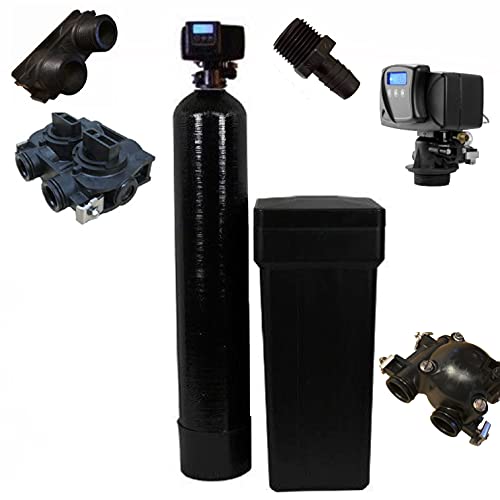
Higher Capacity: DuraWater Fleck 5600 SXT — 64,000 Grain
Built around the widely-used Fleck 5600 SXT control valve (a well-established name in the water treatment industry, also sold under various private-label brands), sized up to 64,000 grains for larger households or harder water that would otherwise force more frequent regeneration cycles on a smaller unit.
- Typical price: about $910
- View on Amazon
As a rule of thumb echoed across plumbing and water-treatment industry sources, most homeowners land in the $1,000–$3,000 range for unit plus installation combined on a typical whole-house softener project, with the unit itself commonly $500–$1,500 depending on capacity and features.
Piece 2: Professional Installation Labor
This is the piece most buying guides gloss over, and it varies more than the unit price does. Based on current 2026 cost-guide data from several plumbing and home-services sources:
- Homes with an existing pre-plumbed softener loop (connections already in place from a prior system or during construction): installation labor is typically in the $150–$400 range.
- Homes without a pre-plumbed loop, requiring new connections, valves, and possibly a new drain line and dedicated electrical outlet: labor typically runs $700–$1,000 or more.
- National average plumber rates run roughly $75–$150 per hour, with higher-cost metro areas reaching $150–$200/hour and lower-cost markets closer to $50–$80/hour.
- Combining unit and labor, total installed cost for a typical whole-house softener project is commonly cited in the $1,200–$3,800 range for 2026, though unusually complex jobs (rerouting significant plumbing, tight crawlspace access, etc.) can run well beyond that.
We are not licensed plumbers and these figures are industry averages pulled from current published cost guides, not a quote for your specific home. Actual pricing depends heavily on your regional labor rates, your home’s existing plumbing layout, whether a drain line and electrical outlet are already near the install location, and whether a permit is required in your municipality. Get at least two local quotes before committing, and always use a licensed plumber for main-line work — this keeps you code-compliant and typically keeps the unit’s warranty valid, since many manufacturers require professional installation for warranty coverage.
Piece 3: Ongoing Salt and Maintenance Costs
This is the cost that keeps accruing after the install crew leaves, and it’s worth budgeting for explicitly:
- Salt: A typical family of four with moderately hard water uses roughly one 40-lb bag of salt per month, or about 6–10 bags per year. At standard pricing (roughly $5–$10/bag for basic salt, more for premium pellet or rust-remover formulas), that’s commonly $50–$100/year in salt, with some industry sources citing a wider $60–$300/year range depending on hardness level, household size, and salt type. As a real example, a 2-pack of Morton Clean and Protect Water Softener Salt Pellets (40 lb each) is currently around $40 on Amazon (about $20.50/bag). That’s noticeably higher than the same product typically costs picked up locally at a hardware store or grocery store — salt is heavy and bulky, so Amazon pricing on it often reflects shipping economics rather than the true per-bag cost. If you have a hardware store nearby, it’s usually the cheaper option for ongoing salt purchases; the salt-cost estimate above assumes local pickup pricing, not the Amazon price shown here.

- Electricity: The control head’s regeneration cycle adds a modest amount to your electricity bill, commonly estimated at $30–$100/year.
- Filter/pre-filter replacement (if your softener includes a sediment pre-filter stage): commonly $20–$50/year.
- Resin bed replacement: Resin beds degrade over years of use (chlorine exposure and iron fouling are common culprits) and eventually need replacing, commonly cited at $400–$800 when that day comes — typically somewhere in the 10–15 year range for a well-maintained system, though this varies by water chemistry and usage.
- Periodic professional service (optional, not universal): some households budget $150–$300/year for inspection and cleaning, though many owners handle basic upkeep (checking salt levels, occasional tank cleaning per the manufacturer’s manual) themselves.
Putting It Together: A Realistic First-Year Estimate
| Cost Item | Typical Range |
|---|---|
| Unit (mid-range, digital metered head) | $500 – $1,000 |
| Professional installation labor | $150 – $1,000+ (depends heavily on existing plumbing) |
| Salt (Year 1) | $50 – $100 |
| Electricity (Year 1) | $30 – $100 |
| Filter replacement, if applicable (Year 1) | $20 – $50 |
| Approximate Year 1 total | $750 – $2,250+ |
Every range above reflects typical outcomes reported across multiple 2026 industry cost guides, not a guarantee for any specific home. Your actual numbers depend on local labor rates, existing plumbing, your water’s hardness level, and which unit and salt type you choose. Treat this table as a planning tool for budgeting conversations with a plumber, not a fixed quote.
Installation: Why We Don’t Cover DIY Steps Here
Whole-house softener installation involves cutting into your main water line, adding a bypass valve, typically running a drain line for backwash discharge, and often adding a dedicated electrical outlet for the control head. Depending on your municipality, this can require a plumbing permit and inspection. We intentionally don’t provide DIY installation instructions in this post — incorrect installation can affect your home’s water pressure, create leak or backflow risks, and may void both the softener’s warranty and your homeowner’s insurance coverage in the event of water damage. Consult a licensed plumber in your area for the install itself and to confirm local permit requirements.
Frequently Asked Questions
Is a bigger grain capacity always better?
Not necessarily. Oversizing a softener for your actual household water usage and hardness level can mean less efficient regeneration cycles and wasted salt/water. Sizing is typically based on your water hardness (grains per gallon) multiplied by daily household water usage — a plumber or water treatment dealer can help size this correctly rather than defaulting to the largest unit available.
Does a higher price always mean better performance?
Not automatically. Price differences between the products above mostly reflect grain capacity and control head sophistication (timer-based versus metered/digital), not necessarily build quality across the board. A correctly-sized, well-installed budget unit with a metered head can outperform an oversized or poorly-installed premium unit for a given household.
Can I reduce ongoing salt costs?
Choosing a metered/digital control head over a basic timer-based one is the single biggest lever, since it regenerates based on actual usage rather than a fixed schedule, typically using meaningfully less salt and water over the system’s life. Buying salt in bulk can also reduce per-bag cost somewhat.
Bottom Line
Budget roughly $1,000–$3,000 all-in for a typical whole-house softener installation (unit plus professional labor), and plan for an ongoing $100–$300+ per year in salt, electricity, and periodic maintenance on top of that. The unit price alone, which is usually what gets advertised, is only one piece of the real cost — get a proper local installation quote and factor in the ongoing costs before you commit to a specific system.
Pingback: Building a Whole-Home Resilience System: How Water, Power, and HVAC Work Together - homemechanicals.com