This post contains Amazon affiliate links. As an Amazon Associate, HomeMechanicals.com earns from qualifying purchases; see our affiliate disclosure for details. Links to the ALLPOWERS store are also affiliate links. Prices shown were verified on Amazon on October 5, 2026 and change frequently, so check the current price before buying.
Winter outages are different from summer ones. An ice storm can keep lines down for days, the furnace blower and igniter stop without power, pipes start to freeze, and the urge to run a generator somewhere sheltered from the snow is strong. That last part is how people die. The U.S. Consumer Product Safety Commission warns that portable generator exhaust can kill within minutes, and carbon monoxide poisonings rise after storms, including winter storms, when a generator ends up running in a garage, porch or other space that feels sheltered but is not truly outdoors.
This guide covers how to choose a portable generator for cold-weather outages, the safe-placement rules from the U.S. Consumer Product Safety Commission (CPSC), why the connection to your house must be made by a licensed electrician, and the carbon monoxide alarms every generator owner should have. Product specs come from the manufacturers’ Amazon listings; we have not run these generators ourselves.
Free tool: tick the appliances you need during an outage and get the running and starting watts to shop for. Generator size calculator →
Quick Picks
- Most capacity in this list: Westinghouse 9500 Peak Watt Dual Fuel (about $950), 7,500 running watts on gasoline, 120/240V L14-30R outlet, CO shutdown.
- Mid-size dual fuel: Westinghouse 6600 Watt Dual Fuel (about $650), 5,300 running watts on gasoline, L14-30R and TT-30R outlets.
- Dual-fuel inverter: WEN DF480iX (about $650), 4,000 rated watts, CO Watchdog shutdown.
- Quieter dual-fuel inverter: Champion 4500-Watt Dual Fuel Inverter (about $900), 3,500 running watts, listed at 61 dBA.
- Premium gasoline inverter: Honda EU3000iS with CO-Minder (about $2,400).
- Electrician-installed connection: Reliance Controls 31410CRK transfer switch kit (about $470).
- CO alarms with battery backup: First Alert CO605 (about $24) and Kidde plug-in with display (about $44).
Safety First: Where a Generator Can and Cannot Run
CPSC’s guidance is blunt, and it does not change because it is snowing:
- Never run a portable generator inside a home, garage, basement, crawlspace or shed, even with doors and windows open. Opening a garage door does not make it safe.
- Run it outdoors only, at least 20 feet from the house, with the exhaust pointed away from windows, doors and vents.
- Install battery-operated or battery-backup CO alarms in the home. Follow the alarm manufacturer’s placement instructions; CPSC and the National Fire Protection Association (NFPA) both call for alarms on every level and outside sleeping areas.
- If a CO alarm sounds, or anyone feels dizzy, sick or weak, get to fresh air immediately and call 911. CO is colorless and odorless.
All five generators in this guide have an automatic CO shutdown feature (Westinghouse’s CO sensor, WEN’s CO Watchdog, Champion’s CO Shield, Honda’s CO-Minder). These systems are designed to shut the engine off when CO builds up around the generator. They are a backstop, not a license to run a generator in a garage or near the house, and they do not replace CO alarms inside the home.
For snow and freezing rain, keep the generator dry using only a cover or enclosure the generator’s manufacturer approves for operation, and keep snow clear of the air intake and exhaust. Never improvise an enclosure that traps exhaust.
Connecting to the House: Leave It to a Licensed Electrician
To run hardwired loads such as a furnace blower, a well pump or a hardwired sump pump, the generator must connect through a transfer switch or a utility-approved interlock, installed by a licensed electrician with a permit where required. These devices isolate your house from the utility grid.
Never plug a generator into a wall outlet or dryer receptacle with a double-ended “backfeed” cord. Backfeeding can send power back up the utility line, where it can electrocute line workers and neighbors, and it can damage your generator and home wiring when utility power returns. It is also against electrical code.
The Reliance Controls 31410CRK Pro/Tran kit is an example of the manual transfer switch type an electrician may install. Its listing says it is designed for generators up to 7,500 maximum running watts, handles up to 10 single-pole or 5 double-pole circuits, and comes with an 18-inch flexible conduit whip to the load center. Whether this kit, a different switch or an interlock suits your panel is your electrician’s call. Electricians typically pair a switch like this with an outdoor power inlet box so the generator cord never comes through a window or door. Price on October 5, 2026: about $470.
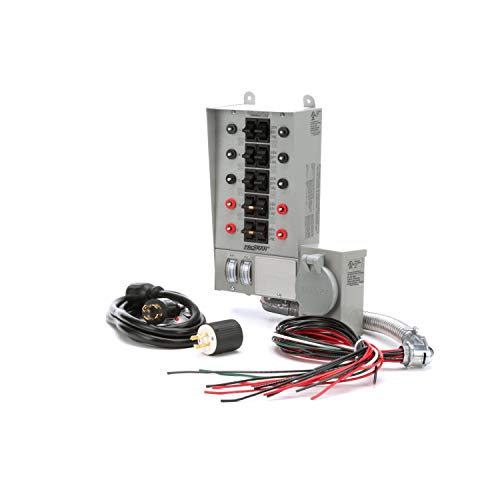
Without a transfer switch, use heavy-duty outdoor extension cords rated for the load, run directly from the generator’s outlets to individual appliances.
Choosing a Generator for Winter
Running watts vs. peak watts
Running (rated) watts are what a generator can supply continuously. Peak (surge or starting) watts are a short burst for motor startup. Size to running watts, then confirm the surge covers the largest motor you need to start. Use the nameplate on each appliance or its manual rather than generic charts, and ask your HVAC technician what your furnace draws. Our 3-day outage backup power guide walks through load planning in more detail.
120V only vs. 120/240V
Some household equipment, such as many deep well pumps, runs on 240V. The two Westinghouse models have an L14-30R 120/240V 30A twist-lock outlet, the type commonly used to feed a transfer switch. The WEN and Champion inverters in this list do not list a 240V outlet, so they suit 120V loads.
Dual fuel in cold weather
Dual-fuel generators run on gasoline or propane. Propane stores without going stale, which helps for a generator that may sit unused for months. Two cold-weather caveats: running watts are lower on propane (the listings below show the reduction), and propane tanks deliver less vapor pressure in very cold weather, especially when the tank is low. Gasoline should be treated with stabilizer if stored, and stored in approved containers away from living spaces. Check each manual for the recommended cold-weather oil grade and starting procedure.
Inverter vs. conventional
Inverter generators produce power that the manufacturers describe as suitable for sensitive electronics, and they run more quietly. Conventional open-frame generators deliver more watts per dollar. Some modern furnaces and electronics are sensitive to power quality, so check your furnace manufacturer’s guidance if you plan to run it from a generator.
The Generators Compared
| Model | Type | Gas running / peak | Propane running / peak | Price (Oct 5, 2026) |
|---|---|---|---|---|
| Westinghouse 9500 Dual Fuel | Conventional | 7,500 / 9,500 W | 6,750 / 8,550 W | about $950 |
| Westinghouse 6600 Dual Fuel | Conventional | 5,300 / 6,600 W | 4,800 / 5,900 W | about $650 |
| WEN DF480iX | Inverter | 4,000 / 4,800 W | 3,600 / 4,320 W | about $650 |
| Champion 4500 Dual Fuel Inverter | Inverter | 3,500 / 4,500 W | 3,150 W running | about $900 |
| Honda EU3000iS | Inverter, gasoline only | 2,800 / 3,000 W | Not applicable | about $2,400 |
Westinghouse 9500 Peak Watt Dual Fuel

The Westinghouse 9500 is the largest generator here: 7,500 running and 9,500 peak watts on gasoline, 6,750 and 8,550 on propane, with a 6.6-gallon tank. The panel has two GFCI 5-20R 120V outlets and one L14-30R 120/240V 30A twist-lock. It has electric start with a remote key fob, a 420cc engine, automatic low-oil and CO shutdown, and a 3-year limited warranty per the listing. Price on October 5, 2026: about $950.
Westinghouse 6600 Watt Dual Fuel

The Westinghouse 6600 is rated at 5,300 running and 6,600 peak watts on gasoline (4,800 and 5,900 on propane), with a 4.7-gallon tank and up to 14.5 hours of listed run time. It has a 5-20R duplex, a TT-30R RV outlet and an L14-30R transfer-switch-ready outlet, plus a 120/240V selector, CO shutdown and a 3-year limited warranty. Price on October 5, 2026: about $650.
WEN DF480iX

The WEN DF480iX is a 224cc dual-fuel inverter listed at 4,000 rated and 4,800 surge watts on gasoline. Outlets are four 120V three-prong receptacles, a TT-30R, a 12V DC outlet and two USB ports. It includes WEN’s CO Watchdog shutdown, a fuel shut-off, wheels and a telescoping handle, and a three-year warranty. Price on October 5, 2026: about $650.
Champion 4500-Watt Dual Fuel Inverter

The Champion 4500 lists 3,500 running and 4,500 starting watts, up to 14 hours of run time on gasoline and up to 21 hours on propane (at 3,150 running watts), and 61 dBA. It has electric start, CO Shield shutoff, an Intelligauge meter for voltage, frequency and hours, and is parallel-ready with an optional kit. The 3-year limited warranty includes lifetime technical support. Stock was limited on October 5, 2026; price that day: about $900.
Honda EU3000iS

The Honda EU3000iS is rated by Honda at 2,800 running watts and 3,000 starting watts, runs on gasoline only and includes Honda’s CO-Minder shutdown system. The “3000” in the model name is the starting figure, so size your loads to the 2,800-watt running output. It costs well above the others here, so it suits buyers who prioritize Honda’s engine, run time and quiet operation over watts per dollar. Price on October 5, 2026: about $2,400.
Carbon Monoxide Alarms: Non-Negotiable
If you own a fuel-burning generator, you need working CO alarms inside the house. Choose alarms with battery backup so they keep working during the outage.
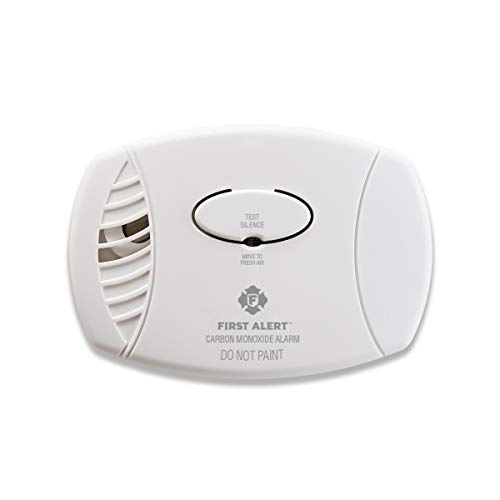
The First Alert CO605 plugs into a standard outlet and has battery backup for outages, an electrochemical sensor, an 85-decibel alarm, an end-of-life signal and a 7-year limited warranty, per the listing. Price on October 5, 2026: about $24.
The Kidde plug-in CO detector runs on 120V AC with two AA backup batteries, has a backlit display that shows CO levels, an 85 dB alarm, and is listed as tested to UL 2034 and ETL Listed, with a 10-year limited warranty. Price on October 5, 2026: about $44.
Place alarms according to the manufacturer’s instructions and local code, on every level and outside sleeping areas, and test them before winter.
Portable Generator or Something Bigger?
A portable generator is the lower-cost way to keep a furnace, fridge and a few circuits running, but it has to be refueled, wheeled out and started in bad weather. If outages are frequent where you live, compare it with a permanently installed unit in our whole-house standby generator guide, or with fuel-free options in portable power station vs. home battery backup.
If what you mainly need through an outage is the fridge, internet, lights and a phone charger, a battery power station is another route. It has no engine and no exhaust, so it can sit indoors, though its runtime is limited by battery capacity. As one example, ALLPOWERS lists its R1500 at 1,152Wh and its larger R3500 at 3,168Wh. Size it against what you actually need to run, and remember a gas furnace still needs a proper electrician-installed connection whatever the power source.
Frequently Asked Questions
How far from the house should a portable generator be?
CPSC says to operate it outdoors only, at least 20 feet from the house, with the exhaust directed away from windows, doors and vents. Never run one in a garage, even with the door open.
Can I plug my generator into a dryer outlet?
No. That is backfeeding, and it can kill utility workers and damage equipment. A licensed electrician should install a transfer switch or approved interlock if you want to power household circuits.
Will a portable generator run my gas furnace?
A gas furnace needs electricity for its blower, controls and igniter. Check its nameplate or ask your HVAC technician for the actual draw. Furnaces are typically hardwired, so you need a transfer switch or interlock installed by an electrician. Check your furnace manufacturer’s guidance on generator power.
Is the generator’s CO shutdown enough?
No. Automatic shutdown is designed to stop the engine when CO builds up around the generator. You still need battery-backup CO alarms inside the home, and the generator must stay outdoors and at least 20 feet away.
Gasoline or propane for winter?
Propane stores well, but output drops on propane and tanks deliver less pressure in deep cold. Gasoline gives full rated output but needs stabilizer for storage. A dual-fuel model lets you use whichever is available.